

By: Janet Roche & Carolyn Robbins
- Hosted By: Janet Roche
- Edited By: Cedric Wilson
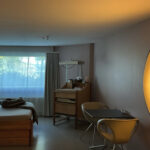
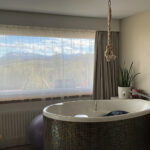
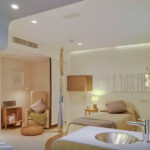
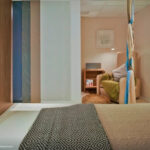
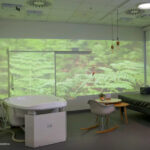
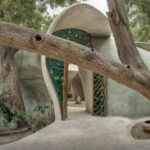
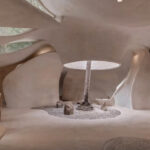
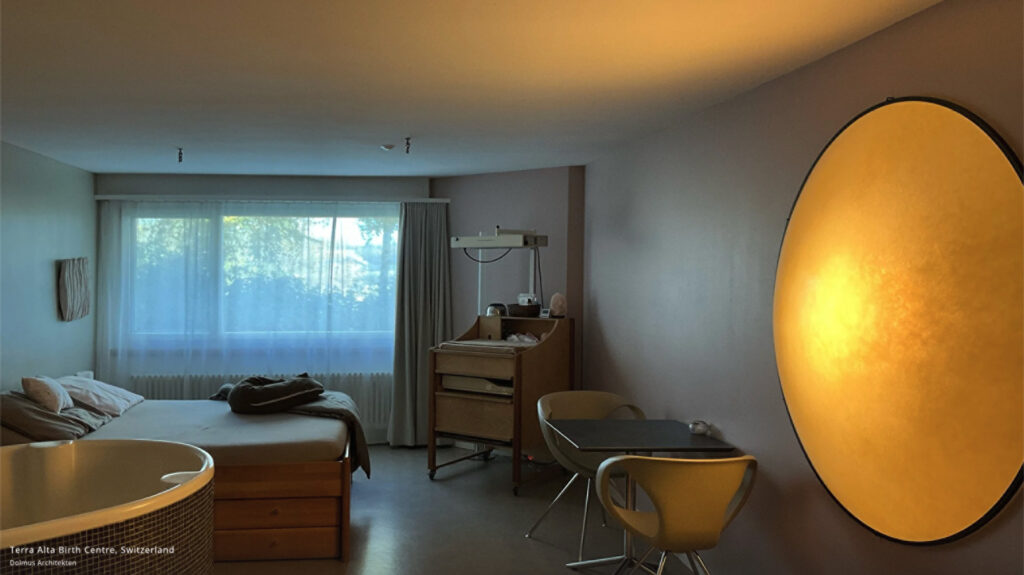
- Photo Credit: Terra Alta Birth Centre, Switzerland – Dolmus Architekten
Guests:
Designing for: Birthing Environments… from Hospital to Home
Season 7, Episode 1
When preparing for birth, there are many considerations that vary with each child. One significant decision is choosing between a home birth, birth center, or hospital setting. Since environments matter, this episode explores the pros and cons of different birthing options, and how design can improve the experience!
IDP invited members of the Global Birth Environment Design Network (GBEDN) to share their expert insight and advice on this important topic. We’ll also find out just what ‘Phenomenological Spatial Experience’ means, and how valuable it can be when creating these (and oh so many other) spaces. Designers, take note!
– References:
GBEDN- Global Birthing Environment Design Network
Transforming Birthspace- Resource webpage
Phenomenological spatial experience
Trauma-informed Design Society
IDP episode: Adaptive Environments for Healthcare & Beyond
– Special Recognition:
Neighborhood Birth Center, Roxbury MA
Christi Belcourt- Indiginous Arrtist
Designing for: Birthing Environments… from Hospital to Home
Season 7, Episode 1
(Music / Open)
Janet: In this series we will be discussing specific examples of design techniques that make a positive difference for people living with certain human conditions.
Carolyn: The more a designer understands the client and or the community the more effective and respectful the design will be.
(Music / Intro)
Janet: Welcome to Inclusive Designers Podcast, I am your host, Janet Roche…
Carolyn: and I am your moderator, Carolyn Robbins…
Janet: We have a very special episode for our listeners today. We are talking to some women designers who are leading the charge for examining and innovating Birthing Environments. We’ll hear how and why they started their organization, the ‘Global Birth Environment Design Network’ – or G-B-E-D-N – and what we designers can do when creating these environments.
Carolyn: You might say we are ‘delivering’ a very interesting discussion…
Janet: (chuckles) Oh my goodness, we’re already starting with the puns I see…
Carolyn: Of course…
Janet: Meanwhile, we’ve assembled a panel of experts in this field: Davis Harte; Doreen Balabanoff; and Alison Mulvale Fletcher … Carolyn, why don’t you tell us a little more about our guests….
Carolyn: Yes, happy to… Dr. J. Davis Harte is a leader in health and wellbeing design. She is the Director and Faculty of the Design for Human Health master’s program at the Boston Architectural College.
Dr. Harte is an educator, advocate, practitioner, and speaker who bridges trauma-informed designed spaces, children’s places, and also birth environments with brain, neuroscientific and environmental psychological knowledge. Davis holds a PhD in Health from the University of Technology Sydney, and she co-leads the Global Birth Environment Design Network.
Janet: And, another fun bio fact, she is also co-founder of the Trauma-informed Design Society with me!
Carolyn: Next up is Doreen Balabanoff. She is an artist, designer, educator and researcher, and Professor Emerita in the Faculty of Design at OCAD University in Toronto, Canada.
Janet: Along with Davis, she is co-founder of the Global Birth Environment Design Network and has an active research-creation project entitled ‘Transformational Change for Birth Environment Design.’ It is focused on reimagining the birth environment as a fundamental place of being and becoming, and creating a web resource for architects, designers and administrators of birth spaces.
Carolyn: And the third of our guests is Alison Mulvale Fletcher. She is a designer and researcher dedicated to transforming health and birthing spaces through thoughtful, human-centered design approaches.
With a Bachelor of Design in Environmental Design, and a Master of Design in Design for Health from OCAD University, Alison combines expertise in spatial design, experience-based co-design, and healthcare innovation to create environments that promote well-being, comfort, and dignity —especially those focused on maternal and newborn care. She is committed to shaping spaces that are not only efficient but also nurturing, empowering individuals and families during some of life’s most significant moments.
Janet: We’ll discuss the various spaces, and of course, design solutions. They also share their own personal stories in a very honest and open discussion.
Carolyn: And I know you’ve wanted to do this topic for quite a while, maybe nine-months or more…
Janet: (chuckles) that’s funny but true… and just because this is a serious subject doesn’t mean there can’t be a few laughs.
Carolyn: Yes, and before I’m tempted to add another pun… here is our conversation on ‘Birth Environments and Design’… (Janet: chuckles).
(Music 2 – Interview)
Janet: Hello and welcome to Inclusive Designers Podcast. I’m your host, Janet Roche. And today we have a lovely group of women who are part of the new birthing environments movement, here and around the world.
So, but I’m eager to kind of dig right in. because I think it’s a really important topic. And I’m going to ask each one to go and introduce themselves, individually, just by voice, so that people who are listening can get an idea of who is speaking for each particular time. So with that, I’m going to jump right on in and I’m going to ask Doreen to start first.
Doreen: Hi, I’m Doreen Balabanoff, I’m a professor emerita at OCAD University in Toronto.
Janet: Terrific. Thank you. Davis…
Davis: Hello everybody. I am Davis Harte, also known as J. Davis Harte. I’m the director and faculty of the Design for Human Health, Masters of Design Studies Program, at the Boston Architectural College.
Janet: Thank you. And for those of you who are listening, our regular listeners you might recognize Dr. Harte because we have had her on the show multiple times in multiple ways. So thank you Davis. And last, but not least, Alison.
Alison: Hi, I am Alison Mulvale Fletcher, and I’m a research consultant working with Davis and Doreen.
Janet: Terrific. Thank you. So I think that we will, I’d love to start with maybe the, the beginnings of when you started this network and what was the impetus for that? And feel free to jump right on in. Doreen, do you want to start? (chuckle).
Doreen: Okay. Well I finished a PhD in 2017 officially. And it was about birth environment design. And I was then on a, email communications list, that was a midwifery research list serve, they call those things. And I posted there, I said, does anybody want to talk about birth environment design research? Because I’ve just finished my PhD, And I’m interested in collaborating. And Davis responded…
Janet: … jumped right on in. Right. (laughs).
Doreen: … jumped right on in. Yup. (laughs).
Janet: She’s waving her arms. (laughs).
Davis: Me, me, me, me. (laughs).
Doreen: Yeah, (laughs), yeah. And so we began to talk and then, I think Liz Newnham also jumped in. She’s a midwife in Australia, and a professor there at Flinders University now, and my PhD was in Ireland, at University College, Dublin, and Davis’ was in Australia with Maralyn Foureur, who’s a renowned figure in this particular arena.
And Liz was seconded to Ireland teaching there for some time, and said, you know, there’s a big opportunity in Ireland where the government has said we need to make birth centers attached to each hospital. And there was nothing like that, none of these alongside midwifery units. (Janet: huh).
And so we started to talk with ourselves and then some other people joined us, and trying to figure out how we might foment some interest in this topic. And much later on, we found out there was a lot of interest in this topic. But at the time we, we didn’t really know did we, Davis? (Davis chuckles).
Davis: Right. We were dreaming and we had big, bold visions, and we were excited. And we knew that there was this passion within us that my PhD and Doreen’s PhD had brought to the surface for us. And we thought, “wow, let’s just keep talking and see what happens” that was basically the gist.
Janet: So what was, you know, your thesis and Doreen’s thesis had a lot of overlap? Or was this something that was more of a, you know, did you know each other before? How, did that all come to be?
Davis: Well, actually, it was interesting. I was in Sydney, Australia working on gathering the data f my doctoral work, which was studying the supporters’ experiences in the built environment. And my supervisor, and boss, Maralyn Foureur, she said, “well, I’m heading off to this ‘Reimagining Birth’ symposium,’ and it was being hosted by some folks I didn’t know. And I looked at the poster and I thought, “oh, how cool. That’s neat. I wish I could go.” Off she went, and it turned out she had been heading to Doreen’s event that she was holding in Ireland. (Janet: oh!)
So both of our doctoral work is on the birth environment design. So the physical built environments that support not just the room in which the birth happens, but all of the surrounding spaces in which a person would need to go through to get to such a location. (Janet: right).
And knowing, might I add that, the home is the gold standard and where we all were being born and giving birth before this untested experiment, ‘why don’t we just move everybody to the hospital’ and who knows what sort of dark background reasons that move even happened to begin with. We don’t really need to go into that discussion, but nonetheless, it’s a huge experiment that is demonstrating to be not great for outcomes to, to give birth in a hospital. So… yeah, there’s a lot of overlap.
Janet: Now what are those poor outcomes? Is it just because the hospitals are kind of notoriously bad, or is it because, like I always joke, that hospitals are no place to be sick. Or is it there’s some duality there, or is it one thing more than the other?
Doreen: Let’s just say that, you know, one does not want to denigrate the value of important medical interventions when necessary. (Janet: of course). And that, that needs to be clear. (Janet: yes). No one here is anti-medicine per se, but I think it’s important to understand, in response to your question, that women were the only healthy people going into hospitals during COVID. (Janet: yeah).
And women pretty much are the only healthy people going into hospitals now to give birth. Everyone else going in has some ailment, some problem. (Janet: right). And so birth is by default treated as though there’s something that needs fixing something that’s wrong, something that can’t progress without hospital or medical intervention. (Janet: huh). And that’s the crux of the concern, right? (Janet: yeah).
And so, what Davis said about the gold standard being the home, and you know, in the deep past, it might have been out in a forest in a beautiful glade somewhere, or it might’ve been, you know, in some beautiful natural space. (Janet: right). And we don’t really know some of that, but we can intuit that birth was a, a thing.
We forget all the time that we are part of mammalian birth, you know, we are mammals. (Janet: right). And we, our bodies know what to do… have known for millennia what to do. (Janet: yeah). And I just want to tip it over to Alison because Alison has actually had two home births. (Alison: I have). So perhaps you could speak to this a little bit.
Alison: Sure. And part of that, to Doreen’s point as well, was motivated because of COVID. I had heard during my master’s program the stats that something like three-percent or less of births actually need to take place in a hospital setting, obviously a lot more than that actually do, and those are the ones that do need necessary medical intervention.
But I was living in Toronto, Ontario watching the instance rate of COVID rise and sort of color banded by severity or the amount. And this was back in, I was pregnant in 2020, in the latter half of it. So no one was vaccinated. And I was thinking if I am pregnant and go into the hospital and pick up COVID, or my child ends up with COVID, what they were doing was separating you for 14-days and quarantining if one of you had COVID and one of you didn’t when you give birth to them, during that initial infant bonding time. (Janet: oh, that’s right, yeah).
So being the kind of designer that I am, I was thinking of a birth plan going. I’m going to come up with multiple birth plans, and if the number is too high, the incidence rate of COVID is too high and we’re not vaccinated, I would prefer to have a home birth.
My first choice was actually to give birth at the Toronto Birth Centre. I was really excited about the idea of going to a birth center initially. But I was, quite frankly, concerned about, you know, COVID and, and getting more sick at the hospital than if we had a home birth.
And it ended up playing out beautifully. It felt like birth progressed naturally. It felt like pain management was quite tolerable. I had one Tylenol in my system and that was it. But yeah, I was really grateful that in Toronto I had the option of pairing my family doctor experience with a midwife.
And we enjoyed our experience of having our baby at home and then being at home with our baby. There was no transitioning her to the car and then getting home. The midwives would also come to our home. At least the initial 2-days afterwards, and then they were coming and doing checkups maybe every week. I don’t remember the exact frequency, but they were coming to us to do postpartum care rather than us having to haul her off and checking in on me as well.
And that was just, again, a beautiful experience because I got to be in a room that I picked the color of and design, picked out the bed for, and had we had the main lights off, we just had this string of twinkle lights around the top of the ceiling. And so it was just this calming, soothing environment that, again, I had already studied with Doreen as a student at that point, so I was already a bit tapped into the power of being in your own space.
But yeah, it ended up being, again, I had two phenomenal births. I think my first labor lasted 7-hours in total. Maybe less than 20-minutes of pushing. (Janet: really). My second one, again, might have been 5- or 6-hours, but literally she was born in 3-minutes, the pushing went so quickly. And yeah, I would, other than I am out of my baby phase, it was something that I would continue to choose again.
And it’s, as a woman, I think one of the most beautiful things we can give other women is the choice in life to decide: do they want to give birth in a hospital? Do they want to give birth in a birth center? Do they want to give birth at home? And creating environments in each of those spaces, especially because there are going to be some women that need more in medically intensive ones. We should be designing for that too.
And even with COVID, again, there were some experiences that I think people just, if you don’t live them, you wouldn’t know what that’s like. But there were women because of hospital policies, you couldn’t bring your significant other in to get an ultrasound with you. So there were women that found out they miscarried their babies with no one in the room to support them. (Janet: oh dear). At all. (Janet: yeah).
And that is an experience that women go through too in rooms in hospitals, which I didn’t even really realize until the conference we hosted recently. Some of those rooms are different rooms than the birth rooms. And those rooms should be designed to support women through that experience too.
That’s one of the things that I think is really beautiful about talking about this subject on an inclusive design podcast is that we should be designing for all ability levels or all physiologies, and all experience types. We can’t just think of what’s the standard of birth, even speaking to rates of C-section or complications, that will vary significantly based on unfortunately, where you’re located, what your ethnicity is. And that shouldn’t be the case, (Janet: yeah), but it is, and it’s well documented. (Janet: right).
Janet: I’ve got so many questions now. So, would you say, was this something that really kind of took off after COVID? Did you find there was more of a spike after that because of somebody like Alison’s experiences? Like, was there more of a focus at that point going, ‘wait a minute, like maybe this isn’t working out?’ Or did the pandemic then become some sort of, all of a sudden, well we can do it this way. You know what I mean? Like, it seems more reasonable to do it this way.
Doreen: Davis you could maybe speak a little bit, (Davis: yeah), you know, I think short answer, it isn’t just the COVID thing.
Davis: Yeah, I’m happy to address that, you know, how the shape of our work was influenced by COVID and how it began. (Janet: yeah). We started before 2020. (Alison: um-hmm). We had our first inaugural meeting at a midwifery conference in Detroit, Michigan. I believe that was in 2017. So that was both, it was a hybrid meeting. So we had people in person with us and many people online as well.
And I don’t necessarily think that COVID amplified or (Janet: changed), changed people’s interest in this topic, per se. It’s more about gathering up the level of complications involved in such a topic area… How does one address design research? What are we trying to find out? Who are we as a network?
And knowing there are so many priorities all happening concurrently, it was challenging to keep our focus and capacity whilst we all had other jobs and such (Janet: sure). So as a passion project, and, um, as you and I well know Janet in our parallel path with, uh, the Trauma-informed Design Society. (Janet: chuckles).
So, you know, I am sure that experience of COVID for the big topic of health and well-being and inclusivity in designed environments, it absolutely has landed for people. They get it. They were in their homes, or they could not do, if they had to go somewhere.
So the immediacy of how much our built environments influence our well-being and outcomes if we have procedures and such is, is undeniable now. Nobody’s debating it, although we will still often find people saying, ‘I don’t really care what the birth environment is like, I just want a good provider. I just want to have my baby. You know, recent comments we’ve seen have said this.
So clearly there is a whole batch of people in the world who think that the environment doesn’t matter at all, (Janet: right), just as long as you’ve got the care you need is fine. What they don’t know is the level of hormonal processes that go on during stressful times, and how the outcomes that they’ve gotten used to.
It’s become normalized that we might have a cesarean birth if you don’t even want one. It’s, you know, there are studies out of Ariadne Labs in Boston that say they know from the spatial flow and floor plan, they can predict looking at the floor plans, what the cesarean rate is going to be like in that setting.
Janet: Really? (Davis: yeah). That’s wild. (Davis: yeah), that’s wild. And what was the outcome of that paper? What was the, or how did that work? Yes, Doreen…
Doreen: The study was really interesting. It looked at a number of very different birth environment places and at different scales. And it represented them all at the same scale and showed you the difference in size and scope. And then gave a very detailed analysis.
And I think the crux of the matter in what Davis just mentioned is, the size of the unit itself. The larger it was—the more birth rooms they had, more labor and delivery rooms, and so on— the more C-sections they had. And that there’s a certain point at which the busy-ness of the operation pushes it into that space of: “let’s just move it through. Let’s move things through.”
And I have seen from, there’s a doctor in India, Dr. Evita Fernandez, who I’ve seen presentations from in various conferences. And, you know, you can literally see the women lined up in the hallway waiting for their C-section, because they need to move them through.
And so I think that, you know, in one of the interesting things going on today is that the c-section rate is developing quickly, is expanding, is increasing. (Janet: right, – that I know). And it is increasing a lot because of elective C-sections, not only emergency C-sections. And so women are kind of voting with their bodies, shall we say, to go ahead and have a C-section instead of going through the physiological birth process.
And there are reasons for that. Partly they are, (Janet: afraid?), many of them are terrified, yeah. (Janet: yeah). Afraid of birth. And there is now a diagnosis, uh, that’s available about fear of birth, and that is being treated by psychologists. And, yeah, you might be afraid of birth, but that’s a complex thing. (Janet: right). Are you afraid of pain? Or are you afraid of medical intervention?
And what we know is that a lot of second birth people opt for so-called ‘out of hospital birth’ – we don’t even like to use that term because that kind of sets everything else up as something related to hospital. But you know, people are deciding that that was too traumatic an experience, the hospital birth.
And so, then there are many stories about that. And then, it becomes quite complicated to, to figure out what to do. And we know tons of stories about women who’ve set up their birth plans and they want it like this, and they want this to happen when that happens, and so on and so on.
And, you know, these birth plans are not actually treated very seriously by medical people in the setting, because they’re deemed not very realistic. (Janet: right). Well, this happens, and we have to do this, and we have to do that, and we have to do the other.
Janet: Yeah. And it’s amazing. I’m going to tell you a quick story, two things. First things first. I had a hernia operation a couple years ago, and anybody that thinks that cesarean is like an easier choice, I highly doubt, you know, they agree with that in the aftermath.
I was in an incredible amount of pain, and I had new, found respect for women who went through cesareans, because I was just like, holy, I mean, you know, you’re cutting through muscle and every, I mean, it was just incredible. And, um, I also decided I was never going to get a tummy tuck, that’s just another sidebar conversation. (Doreen: chuckles).
But I also had a hysterectomy, uh, that was a few years prior. And they wanted to do a, an overnight observation, which I was planning on. And, but I assumed I was just going to go in the regular, you know, recovery room, and get out by 5 or something.
And they put me in the birthing center, which I thought was kind of mean. I wasn’t planning on having any kids, but I thought to myself as a female, and if I had wanted kids, and here I am now having a hysterectomy, and I’m hearing women give birth down the corridor, like, you know, what, what was that about? (Doreen: wow) Right.
And I found that that was, it was again, I had no plans. Right? Like no plans, no thoughts, right? Like, but I thought it was mean. And I, you know, I couldn’t understand why. I’m sure they could have handled whatever was going to happen to me. If there was going to be something to happen to me on, you know, (Alison: a different unit), (Doreen: somewhere else). Yeah. Someplace else. Right. So…
Doreen: And this is so interesting because this is exactly why we say ‘birth environment’ not ‘labor and delivery room’ because it’s really important not to think about this as just we’re trying to reinvent the labor and delivery room. We’re trying to say, “what are all these factors? What could it be like if it could be really emotionally satisfying, but also thoughtful, careful, sensitive. What is it that is impeding, like, is imposing itself on someone like you having that experience.” (Janet: right).
So we know that there are many stillborn babies. They literally have to go in and deliver a baby that is not alive anymore. (Janet: right). And people typically go into the very same places, and they hear babies being born, and they hear babies cries, then they leave through the same doors with the happy parents and, and the families.
And so we are beginning to have some sensitive design that acknowledges that issue, and that makes a different space and place for that. And that values the sensitivity that needs to be brought to that situation in that setting.
So when we’re talking about the birth environment, we’re not trying to talk about making luxury spaces. (Janet: right). Some of them that we might show you might look like luxury spaces, but that’s not the focus.
The focus is on that they are bringing all these experiential properties to the experience that support your sensitive emotions, the experience itself, and how it can be transformed from a traumatic and, (Janet: maybe painful), not very thoughtful (Janet: no) experience, into recognizing that this is a profound existential moment in your life. (Janet: yeah). And, architecture can do this, you know?
Janet: Right. Or at least be of great help. (Davis: yeah). But I do want to talk a little bit about the design piece. And I’m interested to hear a little bit more about what Alison had put together. (Alison: sure). But first, so what exactly is your mission here? What should people know about the mission? I want to get that on the top part of the conversation, so it doesn’t go to get buried somewhere at the end. Anybody. (chuckles). Davis?
Davis: I’m thinking through our various projects and efforts, and we have done so much, and we have a mission. (Doreen: yes). When we speak of the Global Birth Environment Design Network… global is the first word in the story.
Here, we’re developing to the best of our abilities, a spotlight on an area of design that needs to be looked at again for all the types of settings through birth environment deserts— places in our country, in the United States where there’s nowhere for birthing people to go— (Janet: right), to places where it’s normalized in Sub-Saharan Africa to have dozens of children. and these are far-away places. So the global is a key part of our mission. (Doreen: yes).
I always joke to help people remember the acronym— G-B-E-D-N— which stands for the Global Birth Environment Design Network, is that the acronym has B-E-D, or ‘bed’ in the middle of the acronym. (Janet: chuckles). And to me, this is a symbolic important point of when a birthing person shows up to wherever it is they’re going— be it a birth center or a hospital— the messages that they’re getting from the environment is helping them navigate that transition.
This is a big transition and understanding simultaneously what is going on with the hormonal system of the birthing person. If they see medical equipment and they, the first thing they see is a bed, it is undeniable. The message is you are sick or injured and you need us to take care of you and you need to go lay down.
These are all counter to what physiologically is a normal process of moving, listening to one’s body as you shift and move, working with gravity and the supporters in the space, taking care of your needs. Figuring out what those needs are intuitively or just through, ‘wow, they seem to be really sweating, or they need to grip my hand, or they have to pull on something, or they have to have some positioning of their body in a way that can be supported by the space.’
Yes. We want them to be able to rest. Everybody wants to rest. That’s an essential part of life. So beds are not the problem, but the bed being right in the middle. First thing you see a clock and a bed. There’s a clock. ‘Get in there, do it, get done with it. You’re good. Good job.”
Janet: That clock. Now, that’s something, I love that piece because of not just the bed, but the clock. The clock is very kind of emblematic, right? Of like, “you’re still here” like, right? (Davis: mm-hmm). Is that sort of what you’re thinking? (Davis: mm-hmm). I mean, just even the removal of a clock would do wonders, is that my understanding? (Davis: yes, yes, absolutely).
Doreen: So when I was in doing my PhD in Ireland, my colleague Martina organized the symposium that Davis mentioned earlier called Reimagining Birth, Maralyn Foureur was a keynote speaker. But I was told then that Ireland was the, you know, the place where they invented managed birth. And in Ireland at that time, I don’t actually know what it is today, but in, let’s say between 2011 and 2015 when I was there on my PhD, they had an 8-hour rule.
And if you were in that hospital for 8-hours and your labor hadn’t progressed to the right amount that they had designated, then that was an automatic induction. And so whether you liked it or not, if you went into that hospital 8-hours later, and they decided that you hadn’t dilated the right amount, then that was it. You were going to get an induction. And then, things progressed from there.
Very well-known now is this notion of the cascade of interventions that happen, based on, you know, the first thing, whether it’s the induction, of which is the artificial hormones, which recently in our conference, it was mentioned that – no one talks about this— but the artificial hormones, both are called oxytocin.
The physiological ones, the hormone that exists in your body, the neuro hormone oxytocin, which there’s so much literature about today, and how it is involved, not just in birth, but in all of, connection, love, sexuality, sensuality, and so on. But oxytocin as the hormone that is a natural one in your body and the one that is used to induce you, which is an artificial oxytocin. You might think they’re the same, but they’re not the same.
So the artificial oxytocin ramps up your contractions to very high intensity levels. But it doesn’t have all the other complex biochemical and neurohormonal things that go on with natural oxytocin in your body. So, you get this very intense contractions happening without all the other complex things that go on in your body that balance and mediate that.
But I kind of want to return to this notion of the environment, or the design of the environment, because, you know, it’s easy to say, ‘well, show us the proof. What is the evidence?” (Janet: evidence). And today, healthcare environments are very interested in evidence-based design. (Janet: right).
And evidence-based design is an interesting concept because you can prove certain things, but the environment is very complex. (Janet: right). It is this phenomenological space where things are happening, and they are in interaction. Your mind, body, and environment can’t be separated out. They’re… (Janet: yeah, they’re intertwined, right?) … hmm, very, intertwined is the really right word, right? (Janet: yeah).
And so you cannot easily separate. Was it, what you were thinking? Or what your past history was of, you know, what happened to you the last birth? Or you know, in your own birth that you don’t even know about, but it’s in your bodily system. So, you can’t separate out what happens between the mind, the body, and the environment. (Janet: right). It’s really difficult to prove things.
For example, in the one of the case studies where we visited a beautiful birth center in Denmark in a hospital there. And they tried to designate one room as the, you know, the new, better birth room and, and then they had an older one that was not as outfitted. And they couldn’t find a difference in the two. And the, the midwives there spoke to us at some length about the way that, that study just couldn’t… it really couldn’t really work.
And so, you know, you can spend years doing things, testing things, and not being able to prove the things you want to prove. The things that you actually know are working, you know, but you can’t prove them. You can’t make them into evidence-based design.
Janet: So now is this where the fancy ‘phenomenological approach’ comes into play, right? The spatial experience. And I think that we were taught in the Design for Human Health program, it’s like the biological, the psychological and sociological spaces, right? So there’s a lot of different factors going into just even this space.
And then if you’re having somebody who is going through something that’s, I mean, it’s a real-life changing experience. Make no doubt about that. Right? But also, are their senses then even like a little higher and a little more sensitive to the built environment as a result? Good and bad, right? Is that sort of like your experience? Everybody’s nodding. Just FYI. So… Alison, you want to jump in?
Alison: Sure. I, again, reminding me of the conference that we just held at OCAD, and reminding me of one of the researchers that presented there— Orli Dahan from Israel—she’s a philosopher of consciousness studies. And so, the way that you were describing women and their ability to tune in and do phenomenal things in these critical moments of life, she speaks a lot to.
She talks all about set and setting and the importance of not just what those neurotransmitters or hormones are doing in your brain, but the context in which you’re experiencing them. There’s research as well in the sort of field of consciousness around psychedelic drugs and what might cause someone to have a good experience with them or a poor experience with them.
And so she’s interweaving that science of thinking into the science of birth, and birth setting, and how to help make sure that women are having positive experiences similarly, and the environment is huge. But it also is mediated by the fact that we are sort of moving out of our normal prefrontal cortex way of thinking and experiencing the world, and we are actually in a different state of consciousness during birth.
So we’re all nodding along as having listened to Orli talk about this. And we do actually have a video of her presentation on our YouTube channel that we can provide a link to for your listeners as well, because she dives into that specifically in much more detail than I can briefly, (Janet: that would be great), but it is a big piece of it.
Doreen: Yes. And we have, to Alison’s point, the entire conference was taped, and we have a number of really fabulous presentations, video presentations to share with your viewer, your listeners.
Janet: Right. I always say ‘viewers’ too. So, just again, that was OCAD, which I had to look that up. So that was Ontario Art and Design, or, is that right? Did I get that right or no?
Alison: The Ontario College of Art and Design University.
Janet: College. Alright. Oh, there was a C in there, right.
Alison: Yes.
Janet: Okay. OCAD. Right. (laughs).
Doreen: Yes. It’s Canada’s oldest and largest school of art and design, (Alison: yes), which is Ontario College of Art and Design University, O-C-A-D-U. And I taught there for many years, and now I’m a retired professor there but continuing with a big research project. (Janet: yeah).
And it is the Social Sciences and Humanities Research Council of Canada that has supported the work that Davis and I and two other partners— one in Italy, Nicoletta Setola, and one in Australia, Elizabeth Newnham— she’s the midwife amongst us. The other three of us are architects, designers, in that realm.
And I just want to add that midwives have been key in this conversation because midwives are the ones who have, you know, been responding to this problem of the hospital birth room. And nurses as well.
A really renowned nurse in Toronto did a lot of research in this, and began to say, “what if we had an, what we call an ‘ambient birth room’ and we bring in soft lighting and some nature images and control over all the ambient qualities of the room. What if, what if you could change the lighting? What if you could change the temperature? What if you could, you know, take that bed and move it aside and put a, you know, a double bed somewhere?’
And, and so these were the beginnings, and they were coming from the midwives and nurses who were trying to work in those rooms with women. And we know from a lot of written texts that appear in all the papers that people have written over the years, that you know, they would bring in lamps, they would say “bring in a pillow from your home.”
Because the, the sensory stuff, the… (Janet: the smell), yeah. All of those sensory things impact your hormonal state, (Janet: yeah), and therefore your mind, body, environment, you know, totality. (Janet: right). And I just want to also add, that we need to also remember the cultural piece of this…
Janet: Right… the sociological component to it, right? Because I mean, you’re also global, so, right, so, it’s going to look very different maybe in one part of the world to another. (Alison: absolutely). We talk a lot about that in Trauma-informed Design, but we also talk about the ability to have some of that control over your built environment. (Doreen: yes). To have that authority, right, to have that agency you know, in a time where you’re maybe feeling really out of control. You can be in control to a certain degree. (Doreen: yes).
Davis: And the interesting thing about that idea of control for birthing people is that when they’re in that altered state of laboring, making decisions would bring them out of the optimal state that they should be in. So ideally, the environment is designed in such a way that there’s intuitive nudges that will help that person in labor know how to move that’s going to feel best next without making explicit decisions. (Doreen: really important).
Janet: Right. Yeah. Well that makes a lot of sense because, you know, if you’re in the midst of this right, you don’t maybe, “should I have the room be like more purple today?” (Davis: exactly, exactly). “Didn’t work, didn’t work, didn’t work. (laughs). Now I’m mad.”
Davis: “Now I’m mad. I wanted this to be different…”
Janet: Right. Exactly. “I hate that color.” (laughs).
Davis: Yeah, yeah, yeah. Well, another nod to an extremely important seminal thinker in this work is to Bianca Lepori, an Italian architect. She’s extremely sensitive, and she’s the first architect that we know of who studied with midwives to build and design spaces and write about them. So we can look at her writing and say, “aha.” She’s understanding by watching very, very carefully what birthing people and women are going through in their own homes. And they would often be moving in a spiral pattern.
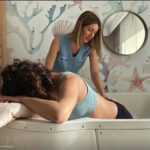
So they would not necessarily just go to the bed and that’s it. It’s moving to places where they could shelter themselves. Similar to another point we heard about in our colloquium was the popularity of using birth pools. (Janet: yeah). Some of the people presenting, I can’t recall who specifically, would say, “well, yes, it’s nice in the water. It feels relaxing.” But is there not something else going on for folks?
And what the idea is, is that they are protected. Nobody’s going to come in and interfere with their space. They’re not going to be, you know, getting close to them and getting into their zone. They’re in a zone, and they need to just let themselves be in that altered consciousness while the new-to-be parent is moving that baby down. (Janet: right). So, it’s a, it’s a fascinating world. (Doreen: yeah). Absolutely.
Doreen: Yeah. And I want to point back to Lepori, I think got her key concepts from Michel Odent. And Michel Odent is an obstetrician— French, but later moved to England— and Dr. Michel Odent ran a clinic in France in which he tried to reinvent that birth space as a, a very private space for undisturbed birth. And I think undisturbed birth is a really key concept. And protected privacy becomes this, I think is one of the key things we, haven’t got yet.
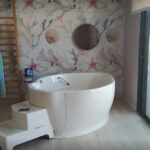
We can make some beautiful birthplaces and spaces, but you will still often see the bathtub, you know, the tub just right out there in plain view. If you open a door, maybe there’s a little curtain, but when you get in there, you are not in a private space, you know? (Janet: hmm). So I think we have yet some work to do on the privacy department, and you think about the difference between that and what Alison might have experienced in her own home on the privacy front. (Janet: right). So, undisturbed birth.
Odent references some studies that were done with mice in which they disturbed the birth of these mice. And, you know, in various and sundry ways. And every time that they did that— whether putting them in a glass bowl with, you know, cat urine in the straw, or picking them up and moving them to a different place—there were consequences. There were outcomes that were, you know, delayed birth. not so good outcomes for the infants.
Janet: Yeah, I, I just want to say, poor little mice. (Doreen: yeah). But it makes a lot of sense that it would be. You know, and, and safety again being another calling card, if you will, for a Trauma-informed Design is making sure that people are always feeling safe. And it’s one of, it’s really one of the major tenets, and I totally agree with you. Especially, I mean, it goes back to that, you know, when people were— women— were giving birth, like, thousands and thousands of years ago, you know, maybe there’s some sort of sense of security with a hospital setting.
But like you said, if people are kind of coming in and out, or even birthing clinics, and so on and so forth, that does get to be interrupted. And but going back to, like I said, those thousands, and thousands, and, you know, a ‘kazoodle’ amount of years ago, you were trying to make sure that the predators weren’t coming after you, right? Or you know, anybody that might be some sort of real threat. Like, it wasn’t just, you know, “oh, I’ve, I brought you some ice chips”… right? Like, “get out.”
So I think that that is a huge thing. And you know, it feels like some of these things might be just even simple design conversations that just need to happen. Like we talked a little bit about the clock. You know, having a curtain around the birthing tub to have that be a little bit more kind of separated.
And one of the papers I did read, you might have read it, it was about— the woman who wrote the paper, she brought a curtain from home. And it was just a, a piece of cloth, basically, I think at the end of the day. But she used it to cover up some of the mechanical settings in her birthing room to give that separation between her giving birth and then the visuals of the medical equipment. Because we’ve talked a little bit about this too, right? You know. keeping that sort of like church and state separate to a large degree.
Again, we’re not saying “no” to hospital, hospital equipment and all the other stuff, but she thought that that really made some sort of difference and that it was, should be recommended for birthing environments to have that separation. And again, some simple things I feel like that could be done to make things a little bit better for women. Alison, I see you’re nodding your head “yes”… Do you want to jump in?
Alison: Yes. And it anecdotally, I think that makes complete sense because a lot of the newer designs that we’ve seen presented as being innovative and sort of addressing some of these issues are looking at how can we make those items accessible in the space, but visually hide them.
So that the doctors and practitioners know immediately where they are so that women aren’t having to— you know, it’s one thing to bring your own pillow from home because you can’t otherwise get your smell on a pillow in that space in any other way. But surely, I mean, even in my own office space, there’s plenty of things stored in the, in a cupboard behind me that has doors on it, but you can’t see them. It’s visually obscured.
It’s not that difficult to put something readily available where people know where it is in the event of emergency, but just have it hidden for the rest of the duration of labor and delivery.
Janet: Yep. I’d like to spend a little time just in the last few minutes to kind of really talk a little bit about what else can we do within these birthing environments. I think there’s so much going on, and I hope you guys would try to come back at some point because it sounds like this is a larger conversation than we can kind of handle in one hour.
But I wanted to get your thoughts and ideas a little bit about what else we could kind of do that just is, you know, kind of maybe simple things. Like I know Alison, you had mentioned you had the, like, the twinkling lights, who doesn’t like a twinkling light, right? It’s lovely. Did you also have music? Like was it all your favorite stuff? Or, you know, oral factory senses going? At your own home birth, how did that look like?
Alison: I think I might’ve had music going. I would’ve been at home with my favorite candles. One of the things I remember doing a lot— to Davis’s Point— is moving around the space, having an exercise ball in hand. And I thought I would be out in my garden walking around. It didn’t end up being what appealed to me at the time of day.
One of the stranger things I actually ended up doing was since I was, not in the delivery phase, but in the labor phase around dinner time, walking around my kitchen island and periodically whenever I felt like it, having a bite of food to eat, which I’m not sure anyone else really ever does. (Janet: right). For the purpose of, you need to have an empty C-section in a hospital, if you’re going to need that procedure. (Janet: right, yeah, yeah, yeah). But I was, I was happily munching away on some salmon that I finished….
Janet: I was just going to say, if you didn’t grab a bowl of ice cream, I’d be really disappointed. (Doreen: laughs). Right, like, you know, at least a couple of bites, (Alison: yeah), you know. So I think that that’s a really interesting point to have that, again, it goes back to autonomy, right? (Doreen: yes). It’s having that agency over how you are seeing your birth (Alison: yes). Right? (Doreen: ah, yeah). So, oh, go ahead Doreen.
Doreen: I think agency is such a key word in all of this, and it is in environmental psychology and in environmental design. “What do you want to do?” Whatever you want to do, it does inform what you see, what you find available for you, or not. And I, I just want to quickly point to our case studies because the 5-years of research that we’ve been engaged in together, we’ve decided that we needed to show architects and designers, we needed them to participate.
We needed them to say, “this is not just a silly little thing of, you know, like these yucky little rooms that we need to make them a little cuter.” We need to say this is a serious architectural thing you could participate in. (Janet: right). And so, we decided that we needed to make a web resource for architects and designers. (Janet: great). And how would we speak to them? What could we offer them?
And so we decided on case studies because case studies are a thing that architects and designers, and even students of architecture and design, know all about. They have to go get precedents in the world and look at them and understand what is there for them as they go forward trying to design something new. (Janet: right).
So, we began to look for positive exemplar, what we called positive exemplar case studies. Places that we could present, and we could go visit, we could document, we could do interviews. So we do have strong qualitative research evidence from the people that we interviewed, which were the midwives, the managers, the architects, and a few women who’d given birth and their partners. So we have documentation of a number of settings now. I think we actually have visited about maybe eight, maybe ten, but we are still putting this together, but we have about five on our website.
And on that website, you can see these places, they’re very, very different. And as we add more, they will be even more different. And each one is unique. And then we see the comments from the designers. What were they trying to do? Where did they get their information from? From the midwives, from the managers or founders, and it’s quite a fascinating study, I think.
Janet: That’s great. Yeah. Again, we’ll have a link to your website so people can log on to your website to go and check out these particular offerings. So. (Davis: yeah). Yeah, Davis…
Davis: Yeah, I’m always out to fly a plane and zoom out and look at the big picture of things. And we are very much about wanting to bring the birth of babies to the center of society, and have it be a celebrated moment for humanity in towns and neighborhoods.
And when we talk about not trying to facilitate undisturbed birth, I can’t help but think about Nashira Baril and her work with the Neighborhood Birth Center, where they’ve had a lovely slogan with some baseball caps and fundraisers to build the Neighborhood Birth Center in Roxbury, Boston, Massachusetts. And this slogan they have is, ‘Disturb the system, not the birth.’
So with years of passion and dedication and pulling together opportunities for our lower resourced sisters and brothers in the world to have the opportunity to go to a place where birth can be a celebrated part of that community arc and that family support system, the neighborhood, the humanity of.
We feel very serious about this work. It’s the future of humanity to allow and help people have this beautiful beginning to life. We’re all born, and we all deserve to have this experience be in places that are supporting us. With not just as we say with the evidence, but also with the knowledge, the knowing.
So getting people to know about it, to be curious about this topic, to think about it, to want to know more. There are so many amazing opportunities to dive in and make this a topic of interest. For students listening, we welcome conversation and the network is very loose and also very sturdy, I would say, wouldn’t you agree, Doreen and Allison?
Doreen: Absolutely.
Alison: Yes, and that was really evident, especially getting to meet a lot of people briefly at the conference that we held in October. People traveled from ten different countries to be there. And the amount of just energy and passion and accomplishments in that room was completely astounding.
And to your point, Janet, about like, what are the next steps for the project and how can we be involved in future podcasts? There’s a lot of energy momentum to continue to build this. I think we could absolutely think about how we could do that in the future.
And one of the things that I think might even be highlighted in this podcast, is how it still feels to me in many ways like we’re exploring and learning how many new insights are still coming up and then having the opportunity to reflect on that and condense it back into a more tangible list at a high level, like Davis is saying, is something we’re, I feel like we’re still iterating on.
It’s been a goal of ours, but we, think again, there’s just so many different layers to it that it is hard to capture in a single podcast or a single statement. Because again, with the global piece of it and wanting to not just narrow it down to one type of birth experience or one type of birth context, it really isn’t just let’s do one design brief. It really is its own field to Doreen’s point too, and Davis’s point that we’re trying to bring awareness to the importance of more knowledge and more even ideas and creativity on how to do better. (Janet: great).
Doreen: And I just want to add that we say architects and designers, and I think we also need to include artists because we’ve seen it in many of the projects that, you know, for example, the one in Denmark which used an interdisciplinary group of architects, musical composers, sound people, film people, script writers even, to address, even designing some rituals for the midwives to use in the stillbirth situation.
The richness of what art and design can bring to the conversation, to the development of this. And, in the Toronto Birth Centre, I think a key component is the murals by Christi Belcourt, who’s an Indigenous artist. And the Toronto Birth Centre I think it is probably the only urban Indigenous midwifery-led birth center in the world. (Janet: interesting.
And it was, you know, the collaboration between Indigenous and the larger midwifery community that led to the development of that, but that also brought the Indigenous artists in to make that place meaningful, deeply meaningful. And so I think that it’s really absent in the hospital environment— any notion of culture, of personal psyche, connection to meaningful things— it’s just absent. And in birth, you have to think about what a crucial moment.
And so we can say, this is just about birthing women— just about birthing women. But every single person on earth is born, and they’re born somewhere, and they’re born in some kind of context, and they’re born in some kind of manner. And they’re born with some kind of psyche and emotional and spiritual sensibility being in the room. And so the room has to speak to that, has to be a part of that.
Janet: Right. Going back to the whole idea of the biological, psychological and sociological spaces, or the ‘phenomenological spatial experience’… (chuckles), I have to keep practicing on that.
But before we go. I do want to just double check with you— because there’s so much to go over— is there something else that we missed, I missed, that you think, oh my goodness, I really wanted to say this, that, the other thing, or we really had hoped to talk about that. So, give you the opportunity to finish it up.
Davis: I feel pretty good about what we covered.
Alison: I do too.
Davis: I mean, as you’re saying, thank you for all the support and encouragement. Yeah, there’s a lot, lot, lot to cover. I mean, on our exhibition we just held, maybe there’s something we could talk about our exhibition.
Alison: Yeah, I don’t think we mentioned that exhibition a lot. (Davis: yeah). In tandem with the conference, we hosted an exhibition as well at OCAD University and for that we did an international call for submissions out and we received a wide array of different submissions from student work to digital interactive art installations.
There’s one in particular called ‘She Said’ that’s still receiving further submissions that capture what ‘she said’ or women have said about their birth experiences. So you can probably also provide a link to that. If anyone would like to contribute their story to that growing platform. I know they would love to receive more.
And, if anyone has listened to today’s podcast and is interested in working with us collaboratively to continue improving the design of birth spaces, regardless of your discipline— whether you’re an architect, artist, designer, mental health expert, OBGYN, or your location around the world— please reach out to us via email. We’re always looking for more passionate people to work with on this project.
Davis: And worlds collide in our work here because part of that exhibition, Alison mentioned, the ‘She Said’ exhibition, was co-created by Adrienne Erdman, who is one of our co-founders of the Trauma Informed Design Society. So Adrienne and her teammate, Suzy Gensler of Ewan Cole is still, as Alison said, is still accepting submissions to their exhibition.
Janet: I think this is a great place to stop. And I don’t usually try to encourage other people to have more podcasts out there, but I think that you guys should have your own podcast. (Davis: laughs). I’m serious, lean into this. I know, Davis is like, one more thing, one more thing. Right, right. (Doreen: laughs). (Davis: if only… laughs), if only.
But it’s not, I can help you, walk you through it, but I think, you know, you could maybe do it once a quarter or something like that. But it could be something that I think that listeners would want to hear. And again, it would be a global conversation. And I just want to encourage you to do that.
But meanwhile, though, I want to thank everybody for coming. And I also want to remind our listeners that you can find all of that information and then some on inclusivedesigners.com. And thank you again for being here today and this was a wonderful conversation. And again, I want to encourage you guys to have your own podcast, because there’s a lot to talk about. So, but anyways, thank you very much.
Doreen: Thanks so much Janet.
Janet: Thank you.
Alison: Thank you so much for having us.
Doreen: Yeah.
Davis: Thank you.
(Music / Outro)
Janet: What an important discussion on birth environments! We covered everything from hospital to home, and what that means for women at such a vulnerable time.
Carolyn: Yes, and how simple things like removing a clock and having medical devices less visible can make it so much less stressful.
Janet: And there are some adjustments we as designers can make in the birthing environment if we take women’s well-being into consideration during the design planning.
Carolyn: And don’t forget your favorite new phrase…
Janet: You mean ‘phenomenological spatial experience’ …
Carolyn: Yes I do, that’s the one. (chuckles). But I do bring it up because I think it aligns so well with the Inclusive Design principle of creating environments that include the biology, psychology and sociology of spaces.
Janet: Right! And we will also provide all the information on Global Birthing Environment Design Network and their research, as well as links to many of the other things touched on during this discussion… all at: Inclusive-Designers-dot-com.
Carolyn: That’s: Inclusive-Designers-dot-com…
Janet: A big thank you to Davis, Doreen, and Alison! And, again, to all of you for listening.
Carolyn: Along with all the regular places you get your podcasts— such as Apple, Google, Spotify, and Pandora— you can also find us on YouTube as, you guessed it, Inclusive Designers Podcast. And of course, if you like what you hear, feel free to go to our website and hit that Patreon Button, or the link to our GoFundMe Page.
Janet: Yes, please do. And if you have any questions or suggestions for topics we should be covering in upcoming shows, please let us know. And as our motto says: ’Stay Well…and Stay Well Informed’! As always, thank you for stopping by, and we’ll see you next time.
Carolyn: Yes, thanks again!
(Music up and fade out)